Letterpress · Paper
Best Papers for Letterpress Printing
What makes a letterpress paper take a deep, clean impression, which sheets I'd choose for business cards and stationery, and the ones that won't work.
By Austin Terrill, founder and creative director · Updated · 7 min read
On this page
The best paper for letterpress is soft, uncoated 100% cotton at 32pt (about 0.8 mm) or heavier. Cotton's long fibres compress evenly under the plate, so the ink sits in a clean, deep impression without cracking. Coated, laminated and plastic stocks won't take a letterpress impression at all, and thin paper shows the bite on its back.
Letterpress paper compared
Here's how the papers I get asked about behave under a letterpress plate.
| Paper | Impression | Ink on it | Best for | Watch out for |
|---|---|---|---|---|
| 100% cotton, 32–48pt | Deepest and softest; rounded shoulders on every letter | Slightly softer, Pantone from the Uncoated book | Business cards, invitations, anything held | Large solid areas mottle |
| Cotton, 16pt | Lighter; a faint mirror shows on the back | Same as above | Notecards, inserts, invitations printed one side | A deep bite telegraphs through |
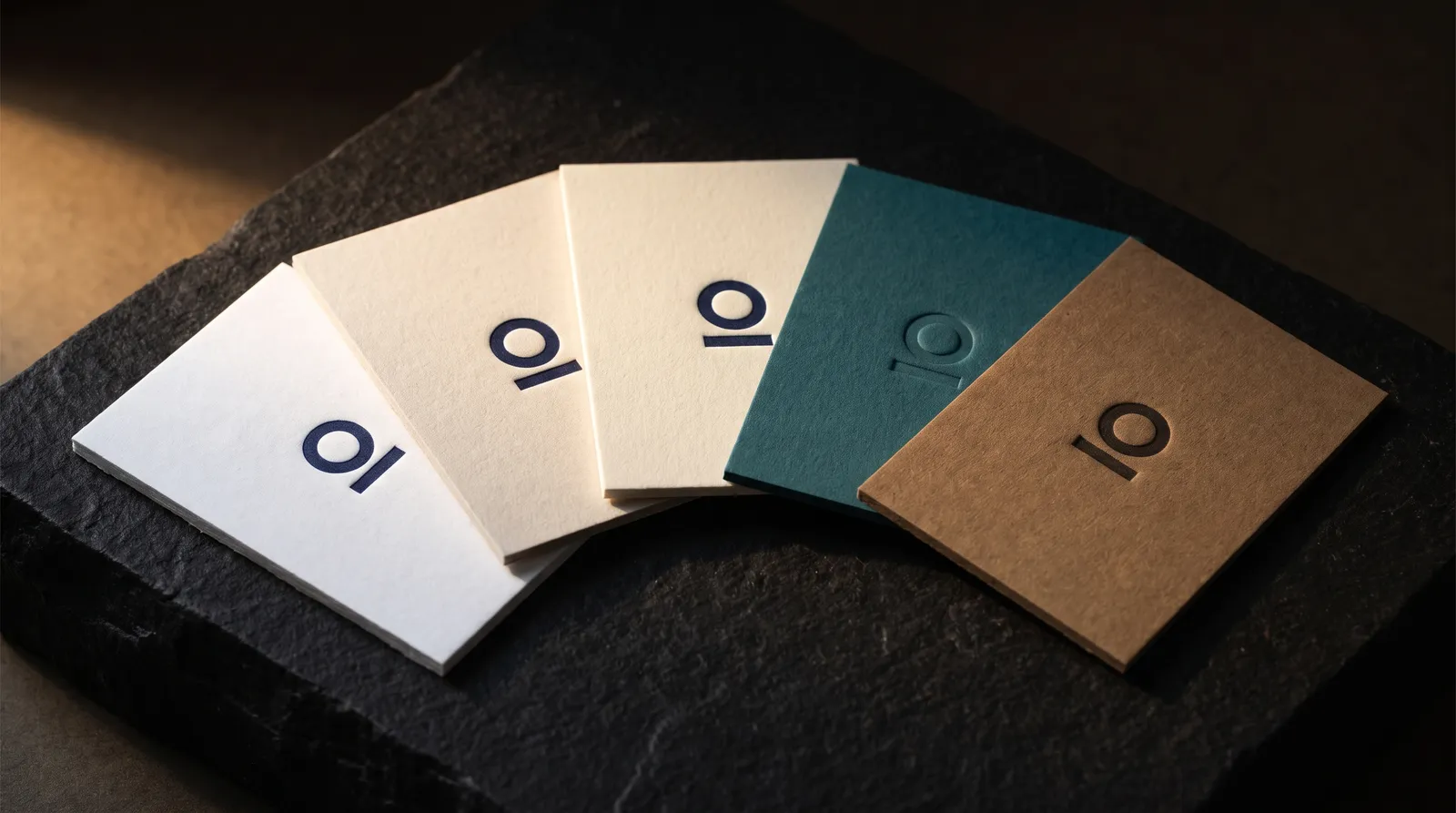
| Through-dyed colored stock (e.g. Colorplan) | Firmer, crisper, more “carved” | Dark inks read; light inks vanish | Color-led brands, blind impressions | Not as soft as cotton |
| Duplex cotton (two sheets bonded) | Each face takes its own bite | As cotton | Two paper colors, printing both sides | Costs more than a single sheet |
| Heavy kraft | Good impression | Prints darker; proof the color | Rustic, food, craft brands | White ink won't show (use foil) |
| Smooth uncoated wood-pulp cover | Shallower, edges can be rougher | Fine | Budget runs, lighter impression | Less “pillow” than cotton |
| Coated, gloss, laminated, soft-touch | Won't take it | n/a | Use foil, spot UV or raised UV instead | The coating cracks or rejects the plate |
| Plastic or metal | Not possible | n/a | Raised UV or foil, confirmed per sheet (plastic); etching or engraving (metal) | No impression of any kind |
Based on our production rules and the jobs we've run. Updated October 1, 2026.
Why paper matters more for letterpress
Most printing lays ink on top of the paper. Letterpress pushes it in. The plate, a raised relief of your artwork, is inked and pressed into the sheet hard enough to leave a recess, usually somewhere between 0.2 and 0.6 mm deep. So the paper isn't just a surface here. It's half the print.
That means three things about the paper decide the result: what it's made of (how evenly it compresses), how thick it is (how deep you can go before the back gives you away), and whether it's coated (a coating fights the plate). Get those right and the type sits in soft little valleys you can find with your thumb. Get them wrong and letterpress looks like flat printing that cost too much.
"On the right paper, you feel letterpress before you read it. On the wrong one, you've paid for a plate and got a flat print."
Cotton vs wood pulp
Cotton paper (old printers call it rag) is the gold standard for letterpress, and it isn't snobbery. Cotton fibres are long and flexible, so the sheet compresses evenly under the plate and springs back around the edge of each letter. You get a deep impression with a soft, pillowed shoulder and no cracking.
Wood-pulp paper can be letterpress printed, but the fibres are shorter and stiffer. The impression is shallower and the edges can tear slightly rather than fold. For business cards, I'd choose cotton every time; for a large run of something that will be glanced at rather than held, a good smooth uncoated sheet is a fair way to save money.

How thickness affects impression depth
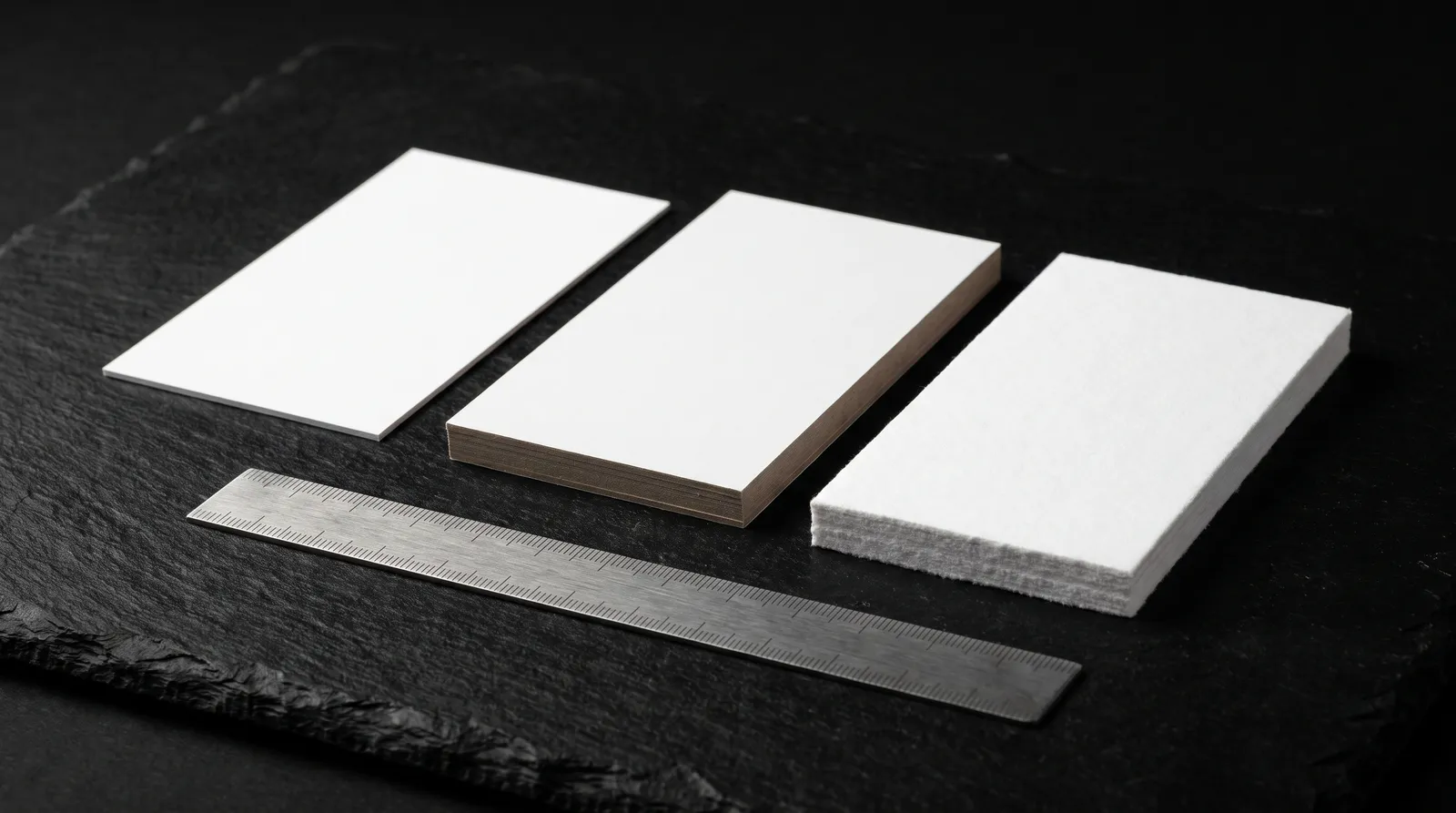
Thickness decides how deep we can go before the impression shows through on the back. Paper is measured in points (thousandths of an inch); a credit card is about 30pt.
| Thickness | About | What letterpress does on it |
|---|---|---|
| 16pt | 0.4 mm | A lighter bite. A faint mirror shows on the back, which is fine on a one-sided invitation and distracting on a two-sided card. |
| 32pt | 0.8 mm | A clear, deep bite. Where letterpress business cards start to feel right, about a credit card in the hand. |
| 48pt | 1.2 mm | Room for the deepest bite, with sheet to spare behind it. About one and a half credit cards. |
| Duplex (two sheets bonded) | 32pt or 48pt total | Each face is pressed on its own sheet before bonding, so both sides can carry an impression without fighting. |
One more thing about weight. Mills sell heavy cotton by basis weight in the US ("110 lb cover", "220 lb double-thick cover") and by gsm in Europe. Neither tells you thickness directly, because cotton is bulky for its weight. When you compare papers, ask for the caliper (thickness) in points or millimetres; that's the number that predicts the bite.
Recommended stocks
Here's what I'd call the best letterpress paper for each job, in order.
For business cards: 48pt 100% cotton as standard, with 32pt also orderable. This is the sheet behind our letterpress business cards and several of our letterpress case studies. Thick enough for a deep bite, soft enough that every line has a rounded shoulder.
For two paper colors, or printing both sides: duplex cotton. Two sheets bonded back to back, one color each, with a stripe of the second color showing on every edge. See duplex cotton letterpress.
For a color-led brand: a through-dyed sheet such as Colorplan. The color runs all the way through, so the impression reveals more of the same color and reads carved rather than printed. Firmer than cotton, and only dark inks show on the deep colors. See letterpress on Colorplan.
For something rustic: heavy kraft. It takes a good impression; inks print a little darker on brown, so we proof the color. Our General Bakeshop cards are maroon letterpress and a blind wheat pattern on kraft.
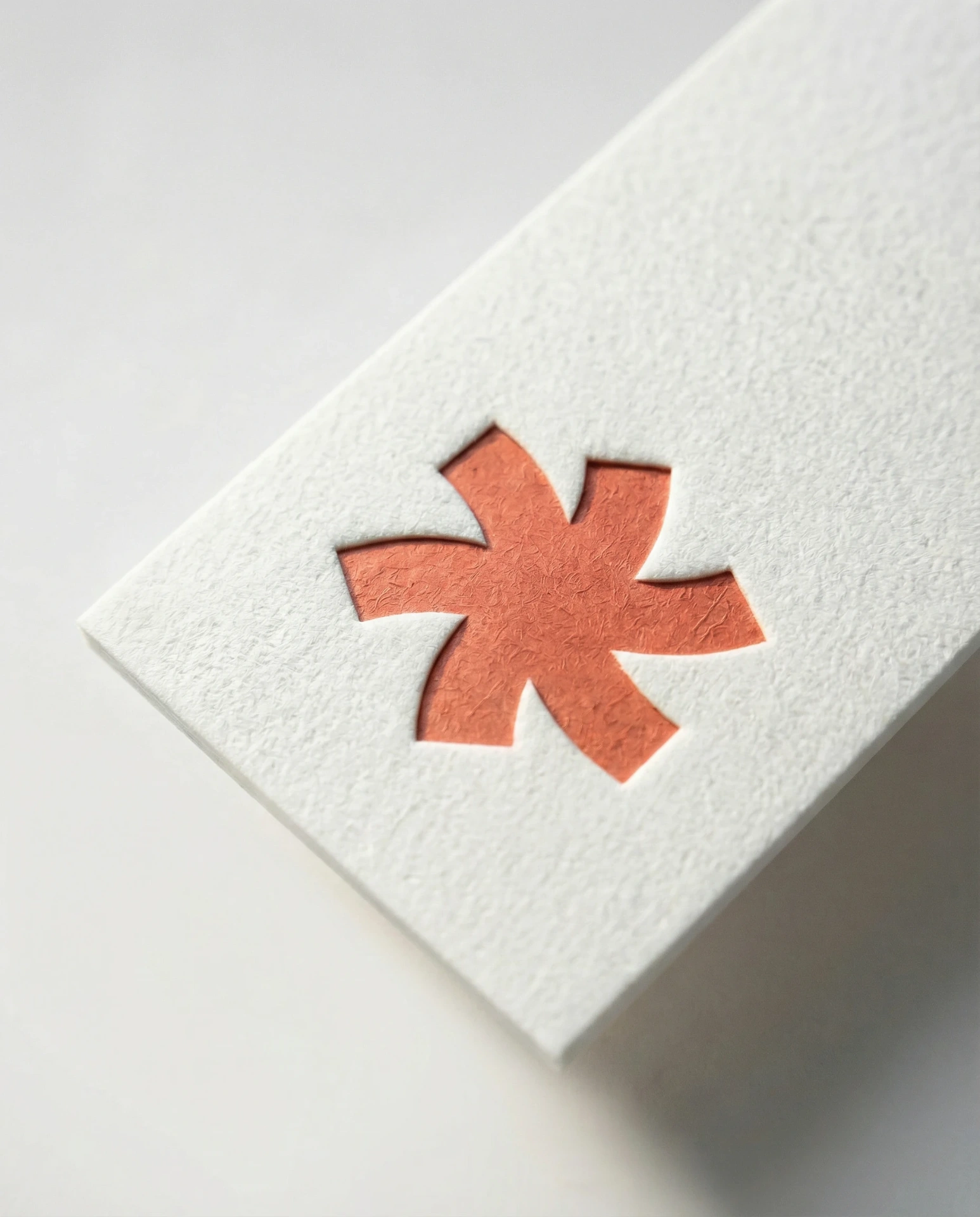 Letterpress business cardsYour artwork pressed into 48pt cotton (32pt also available). From $340 for 250.See the cards →
White, natural or ivory: choosing a cotton shade
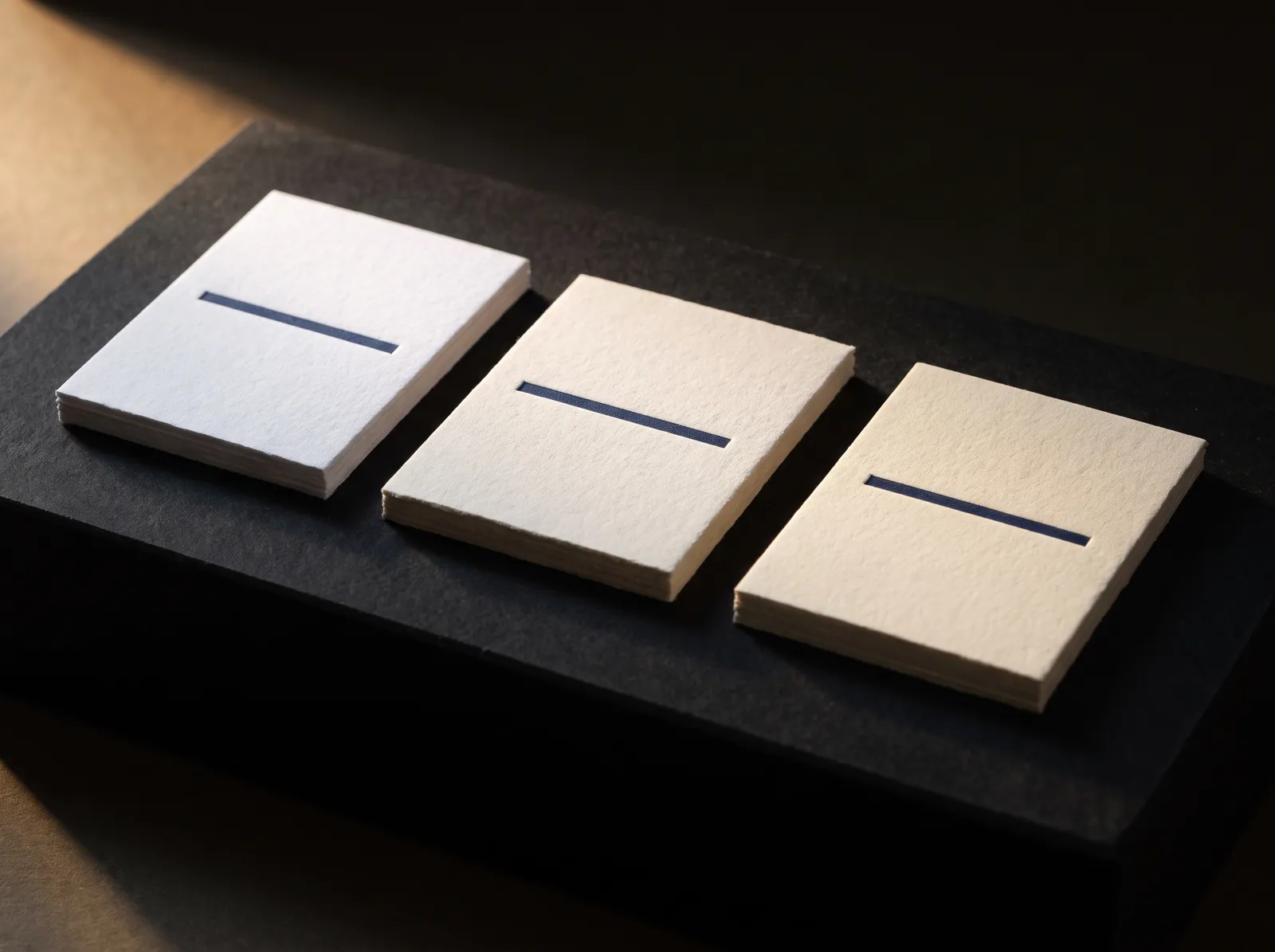
Cotton letterpress paper usually comes in three whites with the same texture: a natural white that leans slightly warm (that's just the raw fibre), a processed bright white, and a creamier ivory. It's a feeling decision, not a quality one.
The thing to know is that letterpress ink is translucent, so the paper tints it. A blue on ivory goes a touch greener; a red on natural white warms up. We match your ink from the Pantone Uncoated book and proof it on the shade you choose, so you see the shift before the run.
Can you letterpress on colored or black paper?
Yes, with one rule: letterpress ink is see-through. Dark inks on colored or mid-tone paper read beautifully. White or pale ink on dark paper looks chalky, because the paper shows through it. For light-on-dark we use white pigment foil instead, which stays opaque on any sheet.
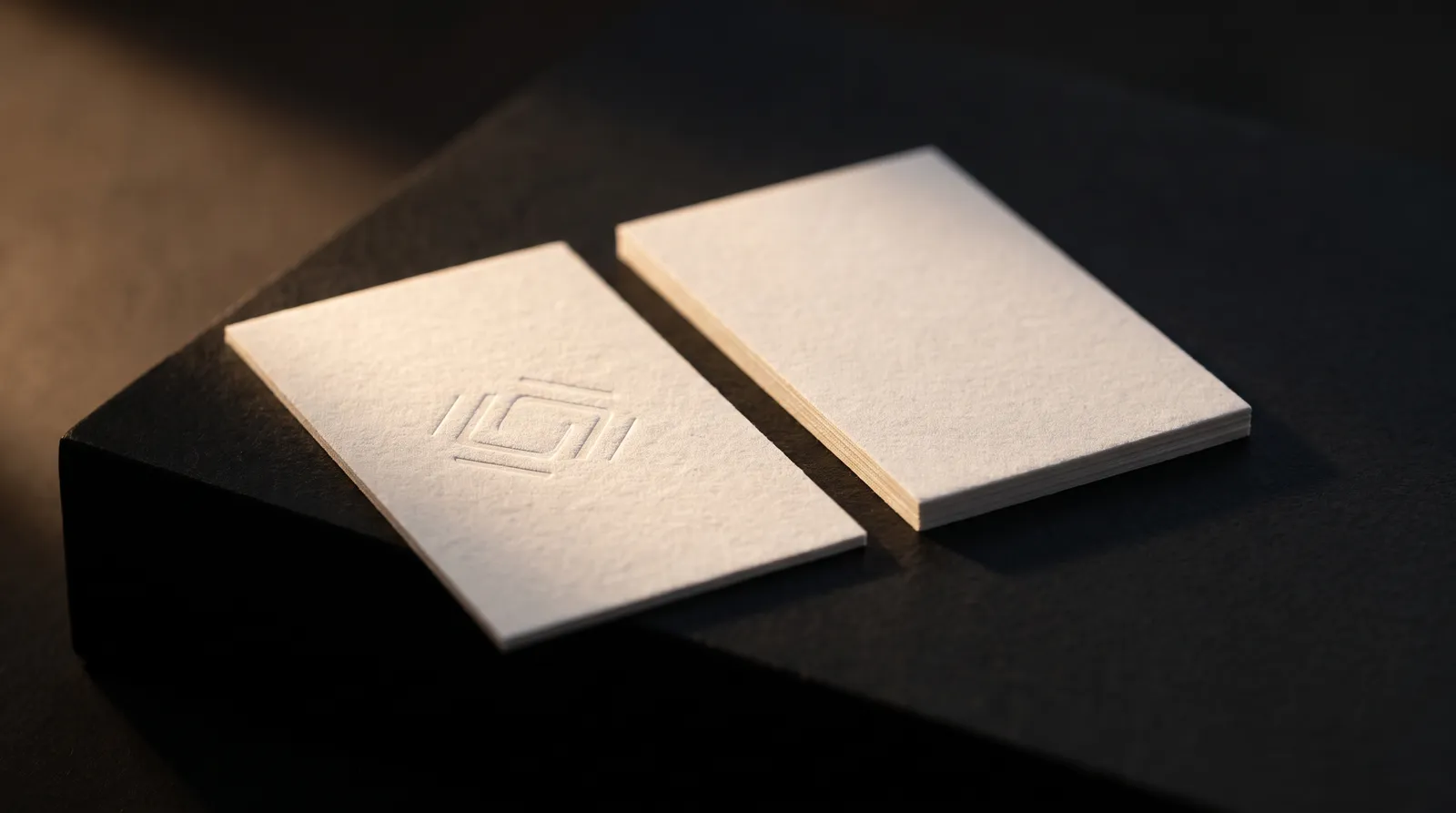
On black, a blind impression (no ink) is very quiet: it reads only when light rakes across it. That's lovely for a mark people discover; it's the wrong choice for anything that has to be read, like a phone number.
Will letterpress show through the back of the paper?
On a single sheet, a deep impression on the front shows as a faint raised mirror on the back. Sometimes that's charming. On a card with type on both sides it fights the back. There are two fixes: press lighter, or bond two sheets after each is pressed (duplex), so each face takes its own bite and the mirror hides in the glue line. For deep impressions with nothing showing through, we use 32pt duplex or heavier.
Papers that won't work for letterpress
- Coated and gloss papers. The coating is hard and smooth; the plate skids and the impression is shallow or cracks.
- Laminated and soft-touch cards. The film is too stiff to take a clean impression. On soft-touch, the tactile move is raised UV or foil instead.
- Plastic. No impression is possible; texture on plastic comes from raised UV or foil.
- Metal. Steel is etched, engraved or color-filled, never letterpressed.
If you love one of those materials and want texture, tell us and we'll suggest the version that works on it.
Pairing letterpress with other finishes
Letterpress pairs well with three things.
Foil, beside it, never on top. Foil won't bond to ink, so we knock the ink out where the foil goes and keep a 1 mm gap. If you want the look of metal pressed into the paper, that's a foil-stamped deboss: the foil and the impression are struck together by one die, on bare paper.
A blind impression. A mark pressed with no ink next to letterpress type is a combination I recommend often. One technique carries the information; the other carries the mood.
A painted edge. Any thickness can be edge painted: on 16pt it's a hairline, on 32pt a clear line, on 48pt a band. Matching it to your ink ties the front, back and edge together.
Two techniques on one face is usually the sweet spot. Past that the card starts shouting.
Frequently asked questions
What is the best paper for letterpress?
Soft, uncoated 100% cotton at 32pt (about 0.8 mm) or heavier. Cotton compresses evenly under the plate, so letterpress ink sits in a deep, clean impression with soft edges. For business cards, 48pt cotton is our standard, and 32pt is also orderable.
Can you letterpress on regular cardstock?
You can on uncoated cardstock, but the impression is shallower and less soft than on cotton, and thin stock shows the bite on the back. Coated or glossy cardstock won't take a good impression at all.
Why is cotton paper better for letterpress than wood pulp?
Cotton fibres are long and flexible, so the sheet compresses evenly and holds the impression without cracking. Wood-pulp fibres are shorter and stiffer, which gives a shallower impression with rougher edges. Cotton paper is also called rag paper.
How thick should paper be for letterpress?
For business cards, 48pt (1.2 mm) is our standard and 32pt (0.8 mm) is also orderable. 16pt (0.4 mm) works for one-sided invitations and notecards with a lighter impression. Thicker paper allows a deeper bite before the back shows it.
Can you letterpress on coated, glossy or soft-touch paper?
No. Coatings and laminates are too hard or stiff to take a clean impression. On those stocks, foil, spot UV or raised UV give texture and shine instead.
Can you letterpress on colored or black paper?
Yes with dark inks on colored paper. Letterpress ink is translucent, so white or light ink on dark paper looks chalky; we use white pigment foil for light-on-dark. A blind impression on black is very subtle.
Will letterpress show through the back of the paper?
On a single sheet, a deep impression shows as a faint mirror on the back. To avoid it, press lighter or use duplex: two sheets, each pressed separately, then bonded. For a deep impression with no show-through, use 32pt duplex or heavier.
Can you letterpress on kraft paper?
Yes. Heavy kraft takes a good impression. Inks print slightly darker on brown, so proof your colors, and use foil rather than white ink for light marks.
Does the paper shade change the ink color?
Yes, a little. Letterpress ink is translucent, so ivory or natural white paper warms or shifts it slightly (blue goes a touch greener on cream). We match inks from the Pantone Uncoated book and proof on your chosen shade.
What is letterpress cardstock?
It usually means a heavy, soft, uncoated cover stock made for letterpress, most often 100% cotton. What matters is that it's uncoated, compressible and thick enough for the impression you want.